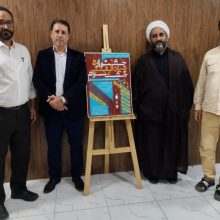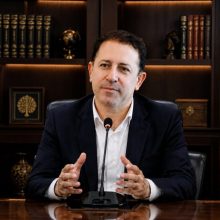
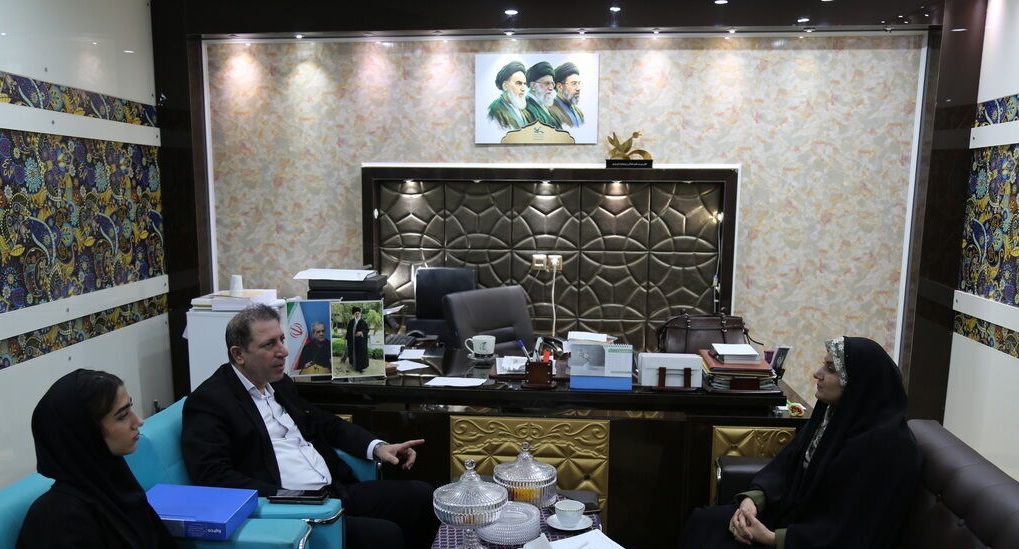
According to the Public Relations office of the National Congress of Commanders, Generals, and 2,000 Martyrs of Bushehr Province, a meeting was held on Sunday, September 27, 2026 (Mehr 5, 1405). The meeting was attended by Somayeh Rasouli, Director-General of the Institute for the Intellectual Development of Children and Young Adults (Kanoon) in Bushehr Province, and Abdollah Raeisi, Secretary of the inaugural “Khesht-e Sevom” (The Third Brick) National Festival. The discussion focused on how to leverage the creative potential of the younger generation for this international-scale event.
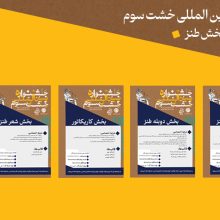
During the session, Abdollah Raeisi provided a detailed overview of the competition categories and the festival’s core themes—held under the auspices of the Congress of Commanders, Generals, and 2,000 Martyrs of Bushehr Province—and emphasized the importance of enhancing the quality of the submitted entries. Highlighting the significant role of children and adolescents in conveying heroic and epic concepts, he expressed hope that the festival secretariat would receive a strong response nationwide, resulting in a diverse range of high-quality submissions from this age group.
Somayeh Rasouli, Director-General of the Institute for the Intellectual Development of Children and Young Adults in Bushehr Province, expressed her satisfaction with Bushehr Province being selected to host this national event. She described the festival as a strategic opportunity for the creation of artistic and literary works centered on national themes. She noted that the “Khesht-e Sevom” Festival provides a platform for children and adolescents to create works—from a fresh perspective—based on the festival’s designated themes. These themes include the Persian Gulf, the Minab School, the Strait of Hormuz, a Powerful Iran, Kharg, and Asaluyeh, all of which reflect the nation’s identity and its epic spirit. Continuing, the Director-General of the Institute for the Intellectual Development of Children and Young Adults (Kanoon) in Bushehr Province emphasized the organization’s supportive role, adding: “Leveraging all its educational, artistic, and cultural resources, the Institute welcomes this auspicious event and will dedicate its full capacity to boosting participation and ensuring the successful execution of the festival’s children and youth segment.”
At the conclusion of the meeting, both parties underscored the necessity of developing joint initiatives. It was agreed that cultural, artistic, and literary programs would be implemented through coordinated efforts between the festival secretariat and the Institute, at both the provincial and national levels, to maximize the utilization of these resources in achieving the festival’s objectives.